Chrome Nails at Home: Powder vs Polish, and Why Chrome Peels
Chrome is the finish everyone tries at home once and gives up on. The problem is almost always one step, and it is not the one you think.
by Haider Ali5 min readupdated september 17, 2026
in this guide
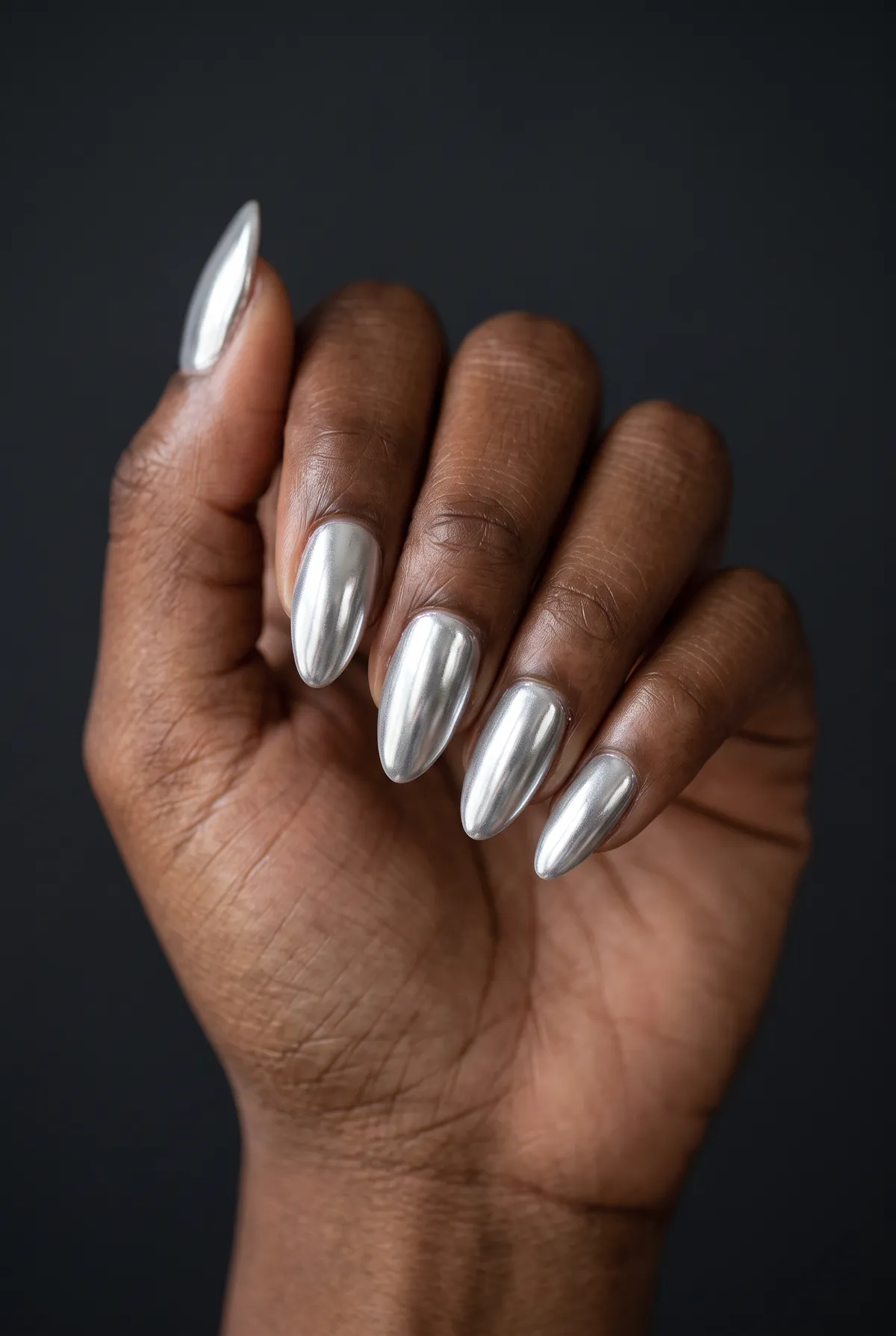
Chrome is not a colour. It is a very fine metallic powder pressed into a gel surface that is tacky but not wet, then sealed. Every failure comes from that sentence: the wrong surface, the wrong moment, or a seal that does not hold. Get those three right and a mirror finish at home is genuinely doable. Get any of them wrong and you have grey dust and a bad mood.
What chrome actually is
The powder is aluminium or mica-based pigment milled so fine it behaves like a liquid when rubbed. On a rough or dry surface it stays powdery. On a smooth, slightly tacky gel surface it flattens into a continuous sheet that reflects like metal. The gloss you see is the powder, not the top coat; the top coat is a clear lid over it.
There are three kinds you will meet:
- Mirror chrome (silver, gold, rose gold). The most reflective and the least forgiving. Every ridge shows.
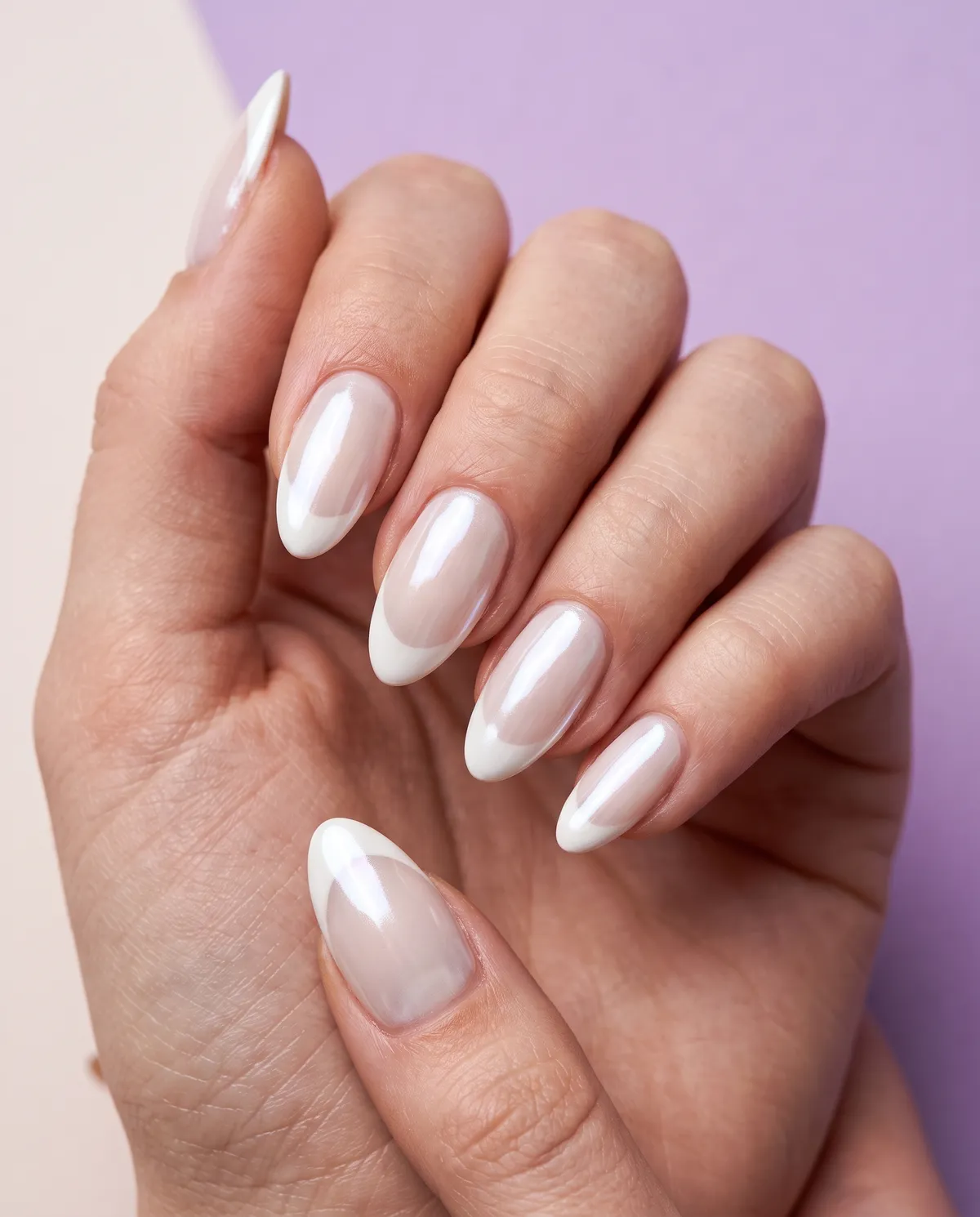
- Pearl or white chrome (the "glazed donut" powder). Sheer, soft glow, forgiving. Used over milky bases.
- Aurora or holographic chrome. Colour-shifting; sits between the two in coverage.
The Liquid Mirror is the first kind at full strength. The Glazed & Unbothered is the second, barely there.
What you need
- A base coat, a colour gel (the colour under the chrome matters; more below), and a no-wipe top coat
- Chrome powder in the finish you want
- A silicone or sponge applicator (the small eyeshadow-style ones that come with the powder)
- A lamp
- Fine dust brush and lint-free wipes
The colour underneath sets the tone. Silver mirror over black gives a gunmetal; over white it gives bright chrome; over a red like Cherry Lacquer Chrome it gives a red mirror. Pearl chrome over a milky pink is glazed donut; over a sheer nude it is a champagne glow.
The steps, and the one that matters
- Prep and base coat as usual. Cure.
- Two thin coats of the colour gel. Cure each fully. The surface must be dead smooth: chrome shows every brush stroke.
- This is the step. Apply a thin coat of no-wipe top coat over the colour and cure it for a short flash, not the full time. The goal is a surface that is cured enough not to move but still tacky enough to grab the powder. Manufacturers give their own timing; a quick flash of a few seconds in a LED lamp is typical. Too little and the powder sinks and streaks; too long and it will not stick at all.
- Immediately dip the applicator in a little powder and rub it onto the nail in small firm circles. Keep going past the point where it looks done; the burnishing is what turns dust into mirror. Cover the free edge.
- Brush off the loose powder. Do not wipe with alcohol.
- Apply a thin, careful no-wipe top coat, cap the free edge, cure fully. A second thin top coat adds durability if the first one shows any powder texture.
Many people do the chrome over a fully cured top coat and cannot understand why it will not take. A fully cured no-wipe top coat has nothing to grip. It has to be under-cured for the chrome step, then sealed with a properly cured layer on top.
Why chrome peels, flakes and dulls
| Problem | Cause | Fix |
|---|---|---|
| Powder will not stick, brushes off as dust | Surface fully cured or wiped with alcohol | Flash-cure a fresh thin no-wipe layer and try again |
| Streaky, sinks in, looks like metallic paint | Surface too wet; cure was too short | Cure a little longer before rubbing |
| Mirror is cloudy or grainy | Not burnished enough, or top coat is a wipe-type | Rub longer and harder; use a no-wipe top coat |
| Chrome wears off at the tips in days | Top coat not capped at the free edge | Cap the edge; two thin top coats |
| Dull after top coat | Top coat too thick, or cleansed with alcohol | Thin no-wipe layer; no alcohol on chrome |
| Cracks in the mirror | Chrome over a flexible, thick or under-cured colour layer | Thin colour coats, fully cured, on a rigid nail |
| Powder everywhere | Normal | Work over a paper towel; brush before top coat |
If you get through the whole set with one good nail and nine bad ones, the good one was the one where the flash-cure happened to be right. Time it and repeat that timing.
Glazed donut, the forgiving version
The glazed look that took over is chrome with the difficulty removed. A pearl or white chrome powder over a sheer milky base does not need to be a perfect mirror, because the base shows through and hides streaks. The finish reads as a soft glow rather than a reflection, which is why it wears gracefully: as the top coat thins at the tips, the glow just fades rather than flaking. The Pearl Glaze Square and the Glazed Pearl French are both this.
If you want to try chrome at home for the first time, start here. Mirror chrome later.
Chrome on part of the nail
A chrome French tip, a chrome cuticle line, or a chrome stripe is the same process on a smaller area. Paint the no-wipe only where you want the chrome, flash-cure, rub the powder on, and it will only take where the tacky layer is. Brush the rest away. Then top coat the whole nail. The Chrome Cuticle Line and the Chrome Accent Nude are both built this way, and both are more forgiving than a full mirror nail because the eye does not scan a thin line for flaws.
Wear and removal
A well-sealed chrome lasts as long as the gel under it: two to three weeks, with the tips going first if the top coat wears through. Refreshing the top coat at ten days with a thin no-wipe layer extends it. Removal is a normal acetone soak, and the powder comes away in the gel; see the removal guide. Chrome takes slightly longer to soak because the top coat is thick and glossy; file the shine off first as you would any gel.
Asking for it
Say "mirror chrome powder" or "pearl chrome glaze" rather than "chrome nails," because the first is a mirror and the second is a glow and salons hear both as "chrome." Name the base colour. Ask whether they use a no-wipe top coat over chrome; if they say they wipe with alcohol, expect a slightly duller finish. The salon lines on the chrome edit already spell this out.
Questions people ask
Can you do chrome nails with regular polish?
Not properly. Chrome powder needs a tacky, partially cured gel surface to bond into. Regular polish dries hard and the powder sits on top as dust, then wipes off. There are "chrome effect" regular polishes that give a metallic look, but not a mirror.
What is the difference between chrome and glazed donut nails?
Same powder, different amount and different base. Full chrome is a heavy layer of silver or coloured powder over an opaque colour, burnished to a mirror. Glazed donut is a light dusting of pearl or white chrome over a sheer milky base, so the nail glows rather than reflects.
Why does chrome only last a few days?
Because the powder itself has no durability; the top coat over it is doing all the work. If the top coat is thin, is not capped at the tip, or is a wipe-type that was cleaned with alcohol (which dulls chrome), it wears through at the tip and the powder rubs away underneath.
Do I need a special top coat for chrome?
A no-wipe top coat is strongly recommended. Wipe-type top coats leave a sticky layer that has to be cleansed with alcohol, and alcohol dulls chrome. Apply a no-wipe gloss over the chrome, cap the free edge, cure fully.
Keep reading
- the salon conversation
What to Tell Your Nail Tech So You Get the Nails in the Photo
- shape before colour
- wear and tear