Nail Care Between Manicures: A Routine That Takes Four Minutes a Day
Nails are dead keratin. They cannot be fed or healed, only protected while the new growth comes in. That makes care simpler than the products suggest.
by Haider Ali5 min readupdated september 17, 2026
in this guide
Most nail care advice is written to sell something. Strip it back and what is left is short: nails are dead keratin, they grow slowly from the base, and the only real care is protecting the plate and the skin around it while new growth arrives. That takes a few minutes a day and almost nothing you do not already own. Here is the whole routine, then the things people do that make no difference.
Daily: four minutes
Oil the cuticles at night. One drop per nail, massaged into the skin at the base and the sidewalls, and over the nail itself if it is bare. This is the single most effective thing on the page. It keeps the skin from drying and cracking, keeps the nail plate flexible enough not to crack gel, and softens regrowth so a two-week-old set looks younger. Jojoba, almond, vitamin E blends, or plain kitchen olive oil: the oil matters far less than doing it every night. Keep it by the bed so it happens.
Hand cream after washing. The skin around the nail dries faster than the nail does. Any cream; the habit matters more than the brand.
Gloves for water and chemicals. Dishes, cleaning, gardening. Repeated wetting and drying is what makes nails peel in layers, and cleaning products strip both nail and gel. It is boring and it is the second most effective thing here.
Do not use nails as tools. Opening cans, picking at labels, scraping. Every one of those is a lever on the tip. Use a knuckle or a key.
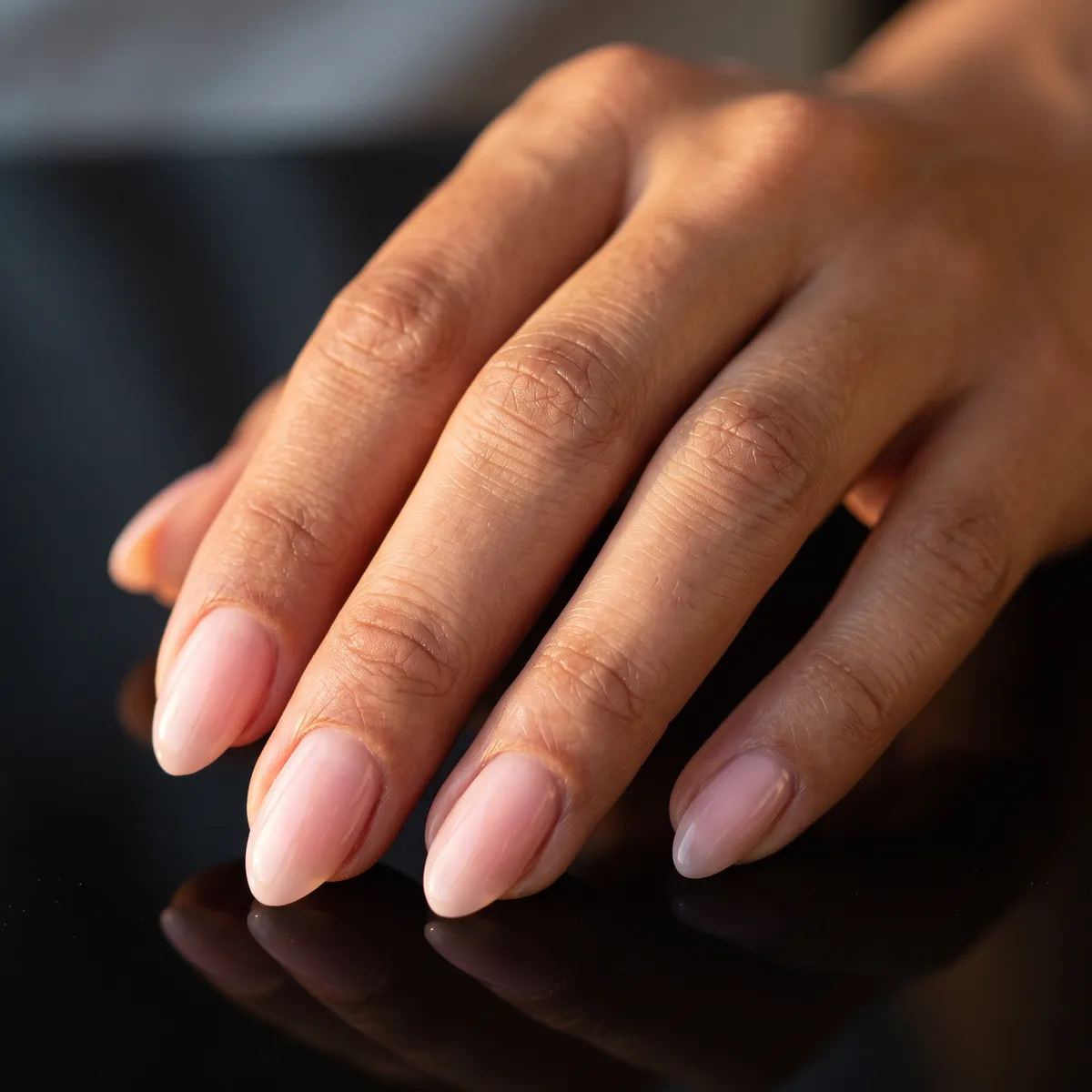
Weekly: ten minutes
File, do not cut, and file in one direction. Clippers crush the layers of the plate together and start peels at the corners. A fine file (180 grit or higher) drawn in one direction from the sidewall to the centre keeps the edge sealed. Sawing back and forth frays it. If you have gel on, this only applies to shaping the free edge; leave the surface alone.
Push cuticles back gently after a shower, when they are soft, with a wooden stick or a rubber-tipped pusher. Never cut living cuticle; the thin skin that seals the base of the nail is what keeps bacteria out. Techs remove the dead tissue on the plate, not the seal. If you are not sure which is which, push and leave it.
Refresh the top coat. On a gel set, a thin coat of top coat (no-wipe, cured) at day ten brings back gloss, seals any tiny chips at the tip and adds a week. On regular polish, a fresh quick-dry top coat every three days does the same job.
Check the edges. Run a fingernail around each cuticle line looking for lifting. A small lift sealed now is a non-event; a large lift ignored is how water gets under the gel. The chipped nail guide has the two-minute seal.
Every set: prep and removal
Between manicures is where the damage happens, and it happens at two moments: taking the old set off and putting the new one on.
Removal by soaking, never by peeling. Peeling takes the top layers of the nail with the gel, and a thinner plate flexes more, lifts sooner and peels more. The removal guide is a fifteen-minute job done right.
Prep that does not thin the nail. The plate needs a light buff to dull the shine before base coat; it does not need to be filed down. If your nails feel thin after every salon visit, watch the prep. A tech who leans on the e-file across the whole plate is removing nail you need.
Twenty-four hours of oil after removal. The nail has been in acetone; it is dry and slightly brittle. Oil it, leave it bare a day, and the next set bonds better.
Every couple of months: a rest week
You do not have to leave nails bare between sets, and people who soak off carefully and never peel can wear gel back to back for years. But a bare week with nightly oil every two or three months is a reset that costs nothing and shows you what your nails are actually like underneath. It is also the right response any time the nails feel thin, bend easily, or are peeling at the tips: keep them short, oil them, give it a fortnight. Nothing heals a nail; time and protection let the damaged part grow out.
If the bare week is intolerable, a strengthening base coat or a sheer polish keeps you decent without adding stress. The sheers on the short almond edit exist for exactly this week.
Things that make no measurable difference
- "Letting nails breathe." Nails have no lungs. Rest weeks help because they stop the removal cycle, not because the nail needs air.
- Gelatin, biotin, collagen and the rest, unless you are actually deficient. Nails grow about three millimetres a month; any effect takes half a year to reach the tip and is small.
- Garlic, lemon, toothpaste and every other kitchen remedy. They do not penetrate keratin.
- Expensive "nail treatments" that are clear polish with a claim. A strengthener with a strengthening ingredient can stiffen thin nails temporarily; the ones that promise growth are selling the base coat you already own.
- Hardeners used every day for months. Formaldehyde-based hardeners can make nails so rigid they snap instead of bending. A few weeks on, then off.
Seasonal notes
Winter is hard on nails: cold air, indoor heating and hot water dry the plate and the skin. Oil twice a day in the cold months if you can, and wear gloves outdoors, which is not a style note. A darker winter colour like Cashmere Beige or a glaze hides the dryness at the cuticle better than a stark white. Summer's problem is the opposite: swimming, sunscreen and sand. Rinse hands after the sea or the pool, and oil at night as usual.
The whole routine on one line
Oil every night; gloves for water; file weekly in one direction; refresh the top coat at day ten; soak, never peel; a bare, oiled week every couple of months. That is all of it. Everything else is marketing or patience.
Questions people ask
Does cuticle oil actually work?
Yes, and it is the one product in this category that earns its place. It keeps the skin around the nail from drying and cracking, keeps the nail plate flexible so gel does not crack off it, and improves the look of regrowth. Any oil works: jojoba and almond are common; plain olive oil from the kitchen is fine.
How long should I leave my nails bare between gel sets?
There is no rule that you must. If sets are removed by soaking and not filed or peeled, back-to-back is fine for most people. A bare week with daily oil every couple of months is a sensible reset, and it is the right move whenever the nails feel thin or are peeling.
Do biotin or collagen supplements make nails stronger?
The evidence is thin. If you are not deficient, they are unlikely to change much. Nails grow slowly, about three millimetres a month, so any change from anything takes months to show at the tip. Protection while the nail grows does more than anything you swallow.
Why do my nails peel in layers?
Peeling is the layers of the nail plate separating, usually from repeated wetting and drying, from filing in a sawing motion, or from gel that was peeled off. Keep them short, file in one direction, oil nightly, wear gloves for water, and let the peeled section grow out; it will not reseal.
Keep reading
- the salon conversation
What to Tell Your Nail Tech So You Get the Nails in the Photo
- shape before colour
- wear and tear