Nail Shapes, Explained: Which One Actually Suits Your Hands
Colour gets all the attention, but shape decides whether a manicure survives your week and whether it flatters your hand. Choose it first.
by Haider Ali6 min readupdated september 17, 2026
in this guide
When a manicure looks "off" and the colour is right, the shape is almost always the culprit. It is also the decision most people leave to the tech, who reasonably defaults to whatever your nails already are. That works if you loved your last set. If you did not, this is the part to change.
Below is every common shape, what it demands of your natural nail, how it wears, and the hands it flatters. Then a short method for picking one, and the words to ask for it.
The shapes at a glance
| Shape | Length it needs | Strength on natural nails | Flatters | Feels like |
|---|---|---|---|---|
| Round | Short to medium | Strongest | Short fingers, wide nail beds, hands that work | Clean, low-maintenance |
| Squoval | Short to medium | Very strong | Almost everyone; the safe default | Polished, office-ready |
| Square | Short to medium | Strong but chips at corners | Long fingers, narrow nail beds | Sharp, deliberate |
| Almond | Medium | Moderate | Short or wide fingers; lengthens everything | Soft, elegant |
| Coffin (ballerina) | Medium to long | Moderate to low | Long fingers, narrow beds; strong on enhancements | Fashion-forward |
| Stiletto | Long | Low; usually enhancements | Long fingers; statement wearers | Dramatic |
Round
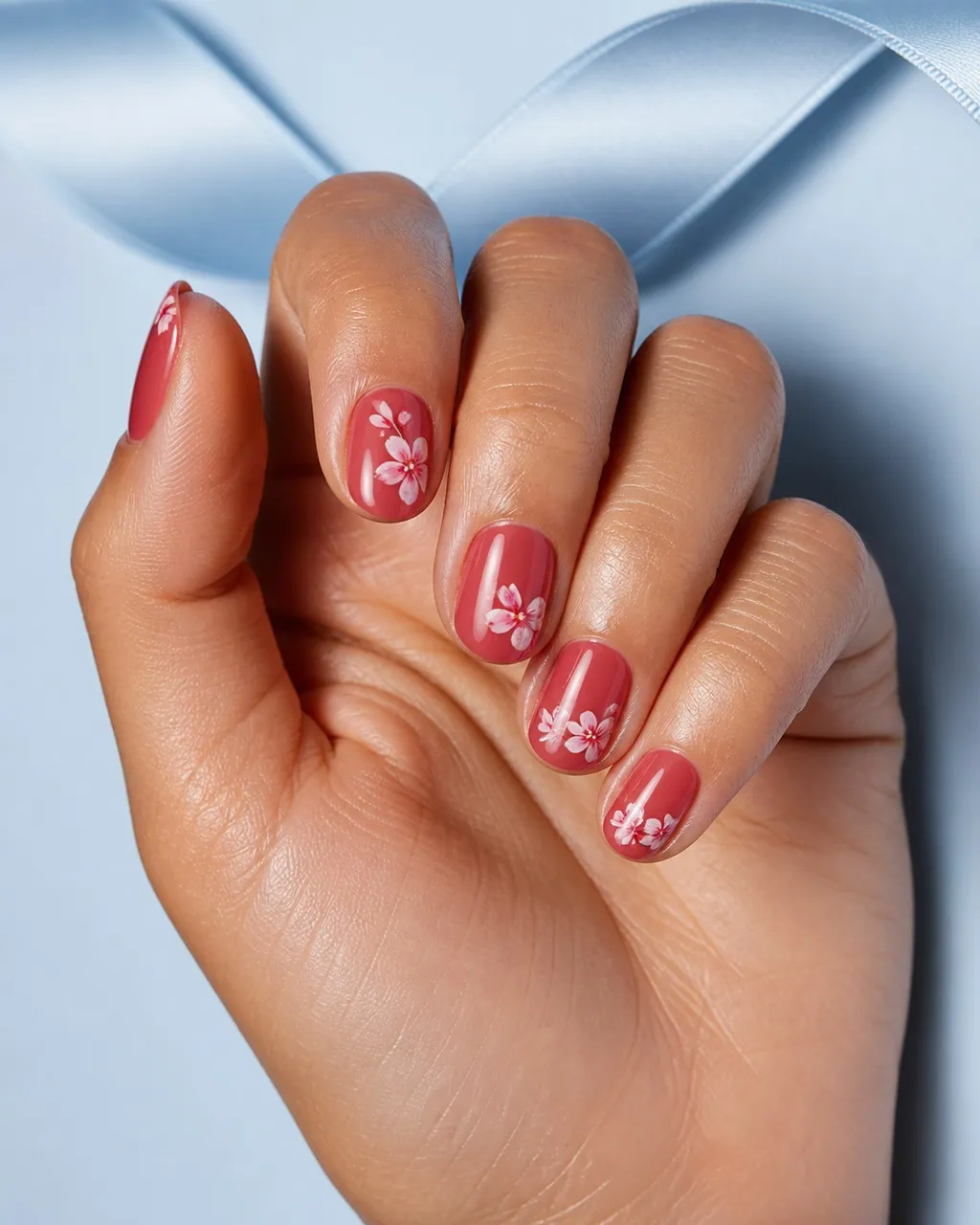
The shape your nails want to be. File the free edge to follow the curve of your fingertip and stop. Round keeps every bit of material at the corners, which is where breaks start, so it survives keyboards, dishes and gardening better than anything else. It suits short nails and wide nail beds because it does not add width, and it makes a thick finger look slimmer by echoing the fingertip.
The downside is that round can read as plain at longer lengths. That is exactly why it is the best canvas for a strong colour: a deep Burgundy Glass or a clean Red Glass Round needs no help from the shape.
Squoval
Square with the corners softened. If you cannot decide, this is the answer, and it is the shape most people are wearing when they say they have "normal" nails. It keeps the strength of round, gives the crisp edge of square, and does not catch on hair or knits the way true square does. Squoval suits nearly every hand, works from very short to medium length, and is the easiest shape for a tech to keep symmetrical across ten nails.
A French tip on squoval is the classic version most people picture: see the Squoval White French.
Square
Straight sides, flat tip, sharp corners. Square looks intentional and modern, especially short, and it gives a French tip the cleanest possible smile line. It is strong along the length because nothing is tapered, but the corners are exposed and they are where chips begin, so a square set that is not capped at the free edge shows wear first at the tips.
Square adds visual width. On long fingers and narrow nail beds that is flattering; on short, wide nails it can make the hand look blockier. If you like the crispness but not the width, a short square with slightly softened corners, like the Poppy Red Short Square, gets most of the look with less of the effect.
Almond
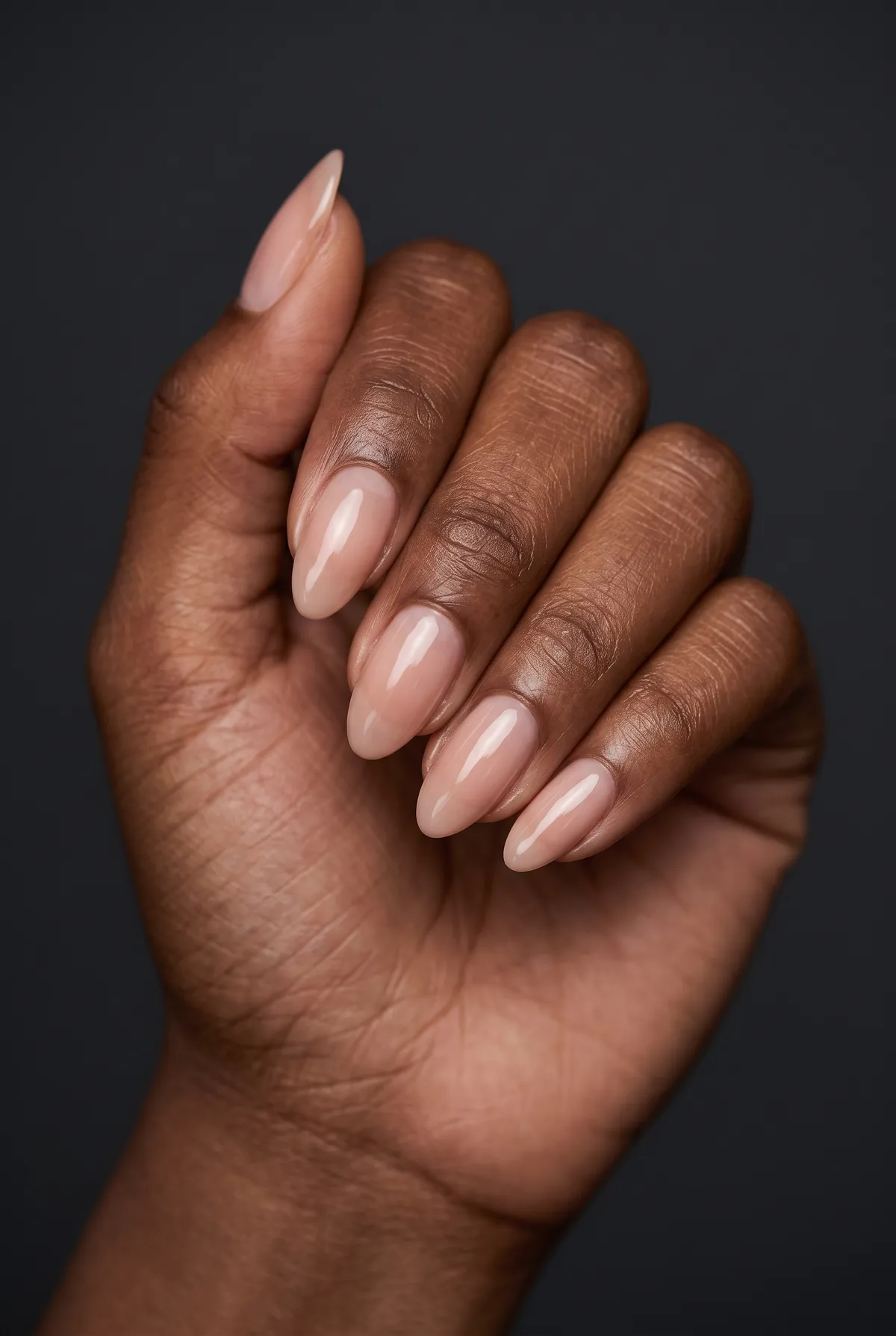
Tapered from the sides to a rounded point, like the nut. Almond is the shape that makes fingers look longer and hands look finer, which is why it is everywhere. It needs some length to taper, so it is a medium-length shape by nature, although a short almond on a well-shaped nail is one of the most wearable manicures there is. The whole short almond edit exists because of that.
The compromise is strength. Tapering removes the corners, and the narrow tip can flex on a thin natural nail. Builder gel or a strengthening base coat solves most of that. Almond is also the most forgiving shape for regrowth, because the taper draws the eye to the tip and away from the cuticle.
Coffin (ballerina)
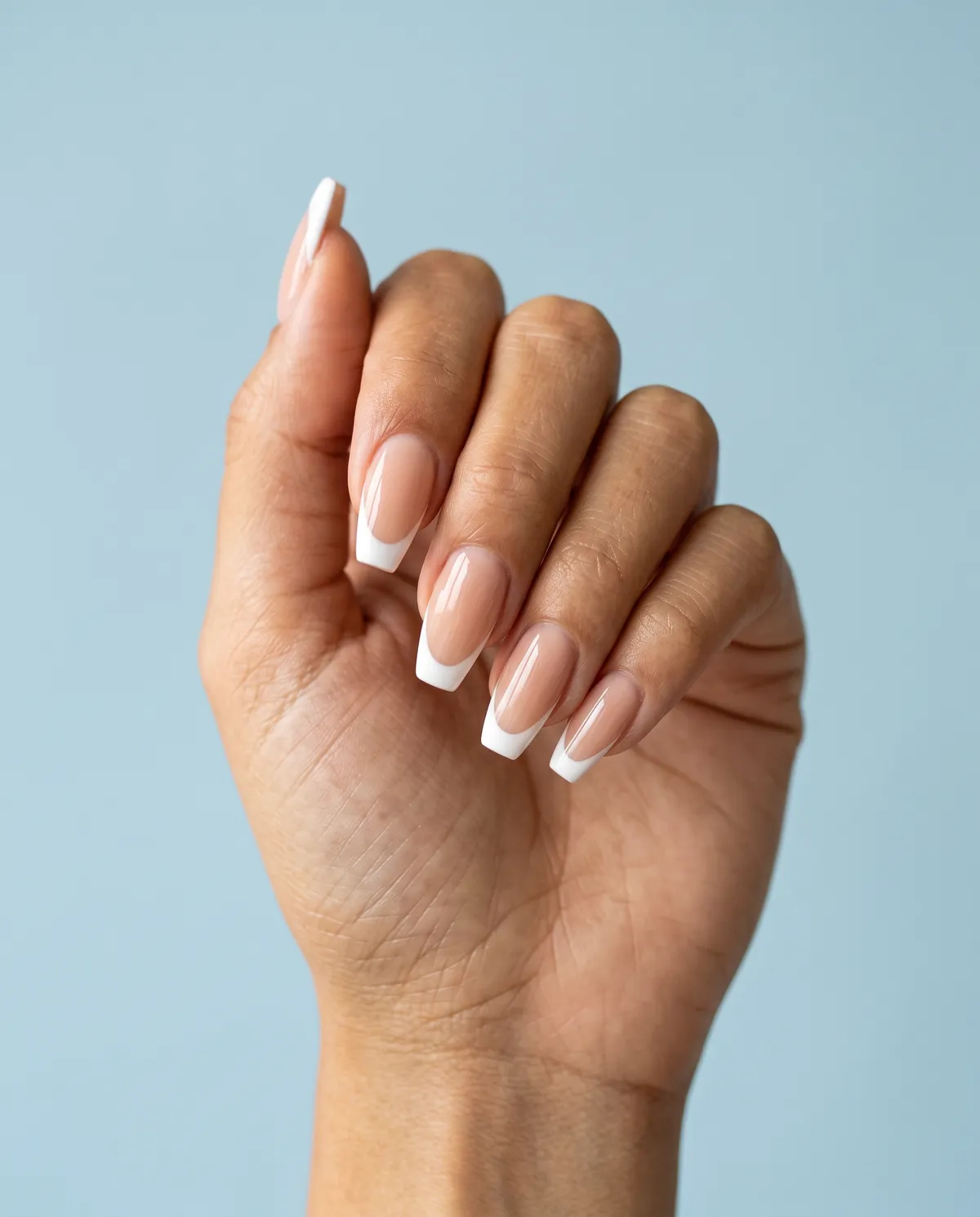
Tapered sides like almond, then cut flat across the tip. The flat end is what makes coffin read as fashion rather than classic, and it is a brilliant canvas for a French tip or a gradient because the tip line is straight. Coffin needs length: without enough nail past the fingertip to taper, the flat end just looks like a square with the corners knocked off. That is why most coffin looks are built in gel or acrylic, and why the coffin edit leans toward medium lengths.
On enhancements, coffin is strong. On natural nails at medium length it is the shape most likely to crack across the taper, because the narrowest point is also the point taking the most leverage. If you want the look on natural nails, keep them short and think of it as a tapered square; the Short Nude Coffin shows how that reads.
Stiletto
Almond taken to a sharp point. Stiletto is a statement, full stop: it lengthens dramatically, it photographs beautifully, and it is impractical for a lot of daily life. Nearly every stiletto set is an enhancement, because natural nails do not have the strength for a long, narrow point. If you want the drama without the commitment, a single stiletto-adjacent accent, or an almond that is slightly pointier than usual, gets most of the effect. The Icicle French is the softer end of the shape.
How to choose
Ignore trends for a moment and answer three questions.
What do your hands do all day? Typing, cooking, childcare, gardening and manual work all punish corners and length. If that is your week, choose round or squoval and keep the length short to medium. You can have any colour or finish on the site at that length; what you cannot have is a long coffin that survives a dishwasher.
What is your nail bed like? Wide beds look best with shapes that taper (almond, or a softened square) because they slim the nail. Narrow beds can take square and coffin without looking heavy. Short beds, where the pink part is small, do best with round or almond, which draw the eye outward; a square tip on a short bed looks stubby.
Are you on natural nails or enhancements? Natural nails limit you to the strong shapes at moderate length. Gel or acrylic opens up coffin and stiletto, and lets you carry almond longer. This is the most common mismatch: a coffin photo shot on acrylics, requested on natural nails, delivered as a disappointment.
If the three answers point in different directions, squoval or short almond is the compromise that satisfies most of them.
Shape and how long the manicure lasts
Shape changes wear more than most people expect, because chips almost always start at a corner or a point, not in the middle of the nail.
- Round and squoval last longest. No corners to catch, no narrow tip to flex.
- Square chips at the corners first. Capping the free edge helps; keeping it short helps more.
- Almond holds up well on healthy nails and poorly on thin ones. A strengthening base coat or builder gel makes the difference.
- Coffin and stiletto are enhancement shapes. On natural nails they are the first to crack.
If your sets never seem to make it past week two, changing the shape is a cheaper fix than changing the salon. Our gel wear guide covers the rest of the reasons.
Asking for it
Name the shape, then the length in a way that can be measured, then the corner treatment if it matters. "Short almond, just past the fingertip" and "square, short, with the corners softened" are complete instructions. "Like the photo" is not, because a photo hides length.
If you are changing shape from what you have, say so explicitly: "I have had square for years; I would like to try almond." A good tech will tell you whether your current length can do it now or whether it needs a fortnight of growth first. Both answers are useful. A silent shape change is how you end up with a compromise nobody asked for.
Questions people ask
Which nail shape is the strongest?
Round and squoval, because they keep the most material at the corners and follow the natural curve of the nail. Almond and coffin remove corner material and need more length to work, so they break sooner on natural nails. Stiletto is the weakest on natural nails and is usually built in gel or acrylic.
Can I get a coffin shape on short nails?
Yes, but it reads as a tapered square rather than a true coffin. A coffin needs enough length past the fingertip to taper before the flat end. On short nails a soft square or squoval gives the same clean-edged feel without the fragility.
What shape makes fingers look longer?
Anything that tapers toward the tip: almond first, then coffin and stiletto. Round on short nails also lengthens because it follows the fingertip. Square on short, wide nail beds does the opposite.
Does shape change how long a manicure lasts?
Noticeably. Corners are where chips start, so square chips first, then coffin, then squoval. Almond and round have no corners to catch, but almond has a narrow tip that can bend and crack if the nail is thin.
Keep reading
- the salon conversation
What to Tell Your Nail Tech So You Get the Nails in the Photo
- the one line
How to Do French Tips at Home: Four Ways to Get a Clean Smile Line
- wear and tear